
Key takeaways
- Mirror a prospect’s tone, pace and even their opening hello to establish rapport quickly
- Track contacts and listings taken by person, then work backward from roughly 18 working days to set the month’s prospecting target
- When a seller says they are returning to their previous agent, ask what will be different this time and whether they would consider a different marketing plan
- Bring FSBO, rental and commission objections up during pre-qualification instead of waiting for them to surface at the listing appointment
- Treat the purpose of prospecting as setting the appointment rather than trying to deliver the entire listing presentation over the phone
- Qualify FSBO motivation by asking where the seller is moving, how soon they need to be there and what happens if the property does not sell
- Protect three or four hours of daily lead generation instead of stopping prospecting whenever current clients become busy
Transcript
00:00 — Building the mindset to handle objections
Ren Jones 00:00
There are a lot of opportunities to ask questions during this broadcast. This is a special show. This is the handling objections show. We’re going to go knee-deep in handling objections.
01:05 Jennifer Murtland is here with me. She’s making calls every day, all morning, four hours a day, to expireds, for sale by owners, just listed and just sold. We’re going to dissect some of the strongest objection handlers.
Ren Jones 01:23
Let’s talk about the Vulcan7 Challenge. Bernie Gallerani said when he first got started, every month he got on a plane and shadowed somebody because he wanted it that badly. Pretend it’s your job to shadow. Make that commitment to go follow somebody.
02:04 You’re talking about just over 24 hours. Get there that afternoon, have dinner with them if they’re available, shadow them all morning, record their conversations, write notes, learn systems, ask a lot of questions, go to lunch and head home. Do that every month and at the end of 12 months you’ll have a dozen friends who are hugely successful.
Jennifer Murtland 02:37
I have shadowed Bernie in Colorado a handful of times. One of the things I learned that works best when shadowing is to have a specific thing that you’re trying to learn. What I found is that you actually end up learning so much more. You don’t know what you don’t know, and then you see it and you’re like, “Oh wow, I can do that.”
03:41 — Why self-doubt kills the close
Ren Jones 03:41
Let’s talk about two things before we go knee-deep into these objections. Self-doubt. When you look at all the people we’ve interviewed over the last few months, there’s no self-doubt. They’re passionate: “I am the best choice.”
04:20 Self-doubt is common. “I may not be good enough.” It’s in their voice. We see it most when they’re calling expireds and somebody says, “I’m going to go back to the last agent,” or, “I’m going to take it off the market.” They throw out one objection and the agent cowers and doesn’t continue.
04:51 Amy Boswell keeps closing over and over because she believes she’s the best. In that area, she is. If you don’t believe you’re the best, nobody else will.
Ren Jones 05:13
You have to have 100% commitment. I remember a couple living a street or two away. I’d set a listing appointment with them, and they’d met with another guy. They called and said they’d decided to go with him. I said, “Wait, wait. You can go with him, but we’ve got to meet first. Then decide you want to go with him.” I went in there and gave my best presentation.
06:15 — Consistency beats the Realtor roller coaster
Ren Jones 06:15
The other thing is inconsistency, the Realtor roller coaster. You lead generate, then you get clients, then you service those clients, so you stop lead generating and just go up and down.
07:29 If you were doing three or four hours a day of lead generation with a goal of taking two listings a week instead of one, you need to set three or four appointments every week, pretty much one appointment a day. Control the controllables. You can get the four hours in and make that happen.
Ren Jones 08:02
Take a look at creative avoidance behavior. “I’ve got to work on my opinion. I’ve got to do this.” You get super creative working on anything other than what you’re supposed to be doing.
08:24 My coach had me track my actual calling time with a stopwatch. Only have it running when you’re making calls. You find out the first hour was 12 minutes and the second hour was 16 minutes. Then it’s, “I need a cup of coffee. I’ve got to go to the bathroom. I’ve got to tell everybody about this call where they were mean to me.”
Jennifer Murtland 09:27
For me, it’s got to be external accountability. Denise and I would text each other at 8:50 saying how many contacts we’d gotten between 8:00 and 8:50 and how many appointments we’d set. If I said nothing, she’d ask, “What are you doing?” She would call me out on it.
15:47 — Build rapport in the first seconds
Ren Jones 15:47
There are things we can say whenever somebody says something that they were disappointed with the last agent, but it’s your strength: “I’m glad we’re talking. That’s exactly why we need to meet.”
Jennifer Murtland 16:01
A lot of agents will go with these scripts and not get the same results because it isn’t conversational. It isn’t warm and friendly and it isn’t their words. Use response patterns like, “Oh, that’s so exciting,” “Good for you,” or, “Wow, you’re moving to Cleveland. How exciting.”
Ren Jones 17:06
One of the quickest ways to get into rapport is to mirror and match their hello. You want to mirror and match their tonality. A lot of times, all you have to go on at the very beginning is the word “hello.” Say hello back the same way.
18:00 Use the words they’re using, the tone and the rate of speed. That happens in the first word. If they’re giving you two-word sentences, you better have a short opener: “Calling about the house on Highland. Still accepting offers on that property?”
19:22 — Differentiate yourself from every other agent
Jennifer Murtland 19:22
When we prospect, sometimes we’re prospecting for another member on the team and setting up the appointment for that person. We’ll say, “This is the area that they specialize in.” When you say “specialize,” people really hone in on it.
Ren Jones 19:53
Unless you tell them differently, they think we all do the same thing. If you specialize, tell them. Make the point that, “Our team does things very differently.” That’s your boilerplate if they’re getting ready to hang up.
20:38 They think all agents are the same. Logically that makes no sense. Not every lawyer is the same, not every doctor and not every teacher. Attorneys have areas of specialty. If you differentiate yourself, there’s your value proposition.
22:19 — Work backward from monthly listing goals
Jennifer Murtland 22:19
We track our contacts and the results every single day and put them on a spreadsheet so we can see how many contacts it takes for us to get a listing. We do it by person, so every person knows their contact-to-listing-taken ratio.
22:46 For the month, we’ll look at what days we’re going to be off and what days we’re actually working. We typically find there’s about 18 working days in each month, and then we’ll backtrack it.
23:07 You always want to do your most important thing first. The most important thing is generating new business, so you do that first thing right out of the gate.
Ren Jones 23:23
The general rule is for every morning to be identical from the time you walk in at 7:15 until noon.
Jennifer Murtland 23:42
Around the 10th or 12th, and definitely by the 15th of the month, we look and say, “Are we on pace to get to where we need to be?” If we’re not, we already know upfront what the plan is.
24:28 Once you implement that plan and know exactly what you need to do, your chances of getting behind are very slim. You end up having more time because you’re focused on the one thing that matters most, which is taking listings.
28:37 — Turn common objections into appointments
Ren Jones 28:37
Let’s look at some really good objections. Here’s one from Mike Dart. He takes 18 to 20 listings a month in Cape Coral. When people would say, “We’ve already relisted it,” instead of saying congratulations or asking who they listed with, he would say, “When can I schedule my interview?”
29:21 One out of five people are lying when they say they’ve already relisted. “When can I schedule my interview?” would expose whether it was a smokescreen, and he’d schedule an appointment with about one out of five.
Jennifer Murtland 29:54
One of my favorite ones is when you get people who just want to get off the phone. Say, “Wait, wait, wait. One more question.”
Ren Jones 30:02
The next question could be, “Gosh, that was a good-looking home. What do you think stopped it from selling?” That works. They come right back because now you want to talk about them.
Ren Jones 30:39
Here’s one of my favorites: “Honestly, Jennifer, what is your hesitation to meet with such a highly successful team such as ours?”
30:53 Or, “If we sold it and you knew you could move in the next four or five weeks, would that create a problem for you?” Another is, “If you got an offer on the home, would you sell it?”
32:06 — When sellers want their old agent back
Jennifer Murtland 32:06
You hear it all the time: “We’re going back with Nancy.” It depends on how they say it. One way is, “I’m curious, what’s going to be different this time? We specialize in homes that didn’t sell the first time.”
32:47 I can usually deliver, “I’m curious, what’s going to be different this time? If a different marketing plan can yield you a different result, is that something you would take a look at?”
Ren Jones 33:08
I used to ask, “Do you feel you gave your last agent a fair chance to get the home sold?” Then I’d say, “I don’t know if it’s the case here, but a lot of times the previous agent feels very badly that they didn’t sell the home and secretly they’re relieved when another successful agent takes over.”
33:44 I’m sure they did everything they could to get the home sold. They called everybody they knew, brought all the buyers they had, knew everybody in their office and pulled out all the stops. It didn’t work. You want to sell the home. That’s exactly why we need to meet.
34:27 — Prospect to set the appointment
Ren Jones 34:27
Don’t ever do the listing presentation over the phone. The purpose of prospecting is to set the appointment. It isn’t to deliver the sales presentation.
35:02 If you say, “I need to see your home,” they’ll get it. They understand. They want to show it to you.
Jennifer Murtland 36:12
The biggest thing people hesitate about when you’re setting an appointment is they think it’s going to be a long dog-and-pony show. Keep it to about 30 minutes.
36:44 We do a pre-qualification. You set the appointment, then prequalify them. I like to set it for a later date and say, “I’m going to do some research. There are a number of questions I’ll need to ask you. Can I call you back at 5:00?” That gives you another contact with them.
37:11 We have 25 questions we ask. Then you send the pre-listing packet and connect with them again. When you go over, it’s about price, pricing strategy and signing the contract.
Ren Jones 37:39
Here’s a script that works well: “Tell you what, Jennifer. I don’t mind doing this. I can come out, take a look at your home, tell you how much it’ll bring in today’s market, how long it’ll take and what we’ve been doing to sell so many homes here in the Hyde Park area. Then you guys decide what’s best for yourselves. How does that sound?”
38:12 If she hesitates: “Listen, Jennifer, if none of this makes any sense in 10 or 12 minutes, I’ll just shake your hand and be on my way. Tomorrow at 4:00?”
41:15 — Bring objections up before the appointment
Jennifer Murtland 41:15
You’re better off spending the time on the phone asking all the questions. Find out whether they’ve thought about selling it for sale by owner or whether they’ve thought about renting it.
41:26 A lot of people think they’re putting ideas into the seller’s head. They’re not. The seller has already thought about it. You’re bringing the objections upfront so you know what you’re dealing with, and usually they don’t bring those objections back up when you get to the house.
42:41 — Handle commission without dodging the question
Ren Jones 42:41
One of the best commission handlers I’ve heard came from Pamela Jones in Alexandria, Virginia. If they ask, “Will you reduce your commission?” or, “How much do you charge?” say, “That depends on the condition of the home, the price we set on your home and how competitive you want to be with the cooperating agents in the market. We’ll cover all of that when we get together Thursday afternoon.”
Jennifer Murtland 43:17
If you’re dealing with a for sale by owner and they’re asking about commission, think about why they’re asking. Typically, they want to net the most amount of money. I’ll say, “A lot of people who ask about commission, what they really want to know is how they can net the most amount of money. That’s what I’m going to show you. I’m going to show you how you can have more even after paying the commission.”
44:09 — Show FSBOs the value of wider exposure
Jennifer Murtland 44:09
A for sale by owner is like a garage sale. You have a garage sale and Macy’s, and they both have the same Michael Kors purse, exactly the same and brand new. Somebody goes to a garage sale and they’re always going to haggle. You go to Macy’s and they’re never going to haggle.
44:38 What you can show them is marketing. If you cast a wide net, are you more likely to catch more fish with a big wide net or a small net? It’s a lot more competitive. Explain how somebody is pushing and marketing the home.
45:13 A lot of times I’ll find out what they do for a living and equate it to what they do, because then you can make an analogy they can relate to and understand.
Ren Jones 45:41
Here’s one from Mike Ross: “If I show you a proven plan to expose your home to 99% of the buying public who are pre-qualified and ready to buy now, would it be worth 10 to 15 minutes of your time?”
48:44 — Qualify FSBO motivation before chasing the lead
Jennifer Murtland 48:44
If they’re a for sale by owner and they have to move in a very short time period, reality will set in. The key thing you want to do is find out whether they have to move and whether they have to move pretty quickly.
49:11 If they don’t have to move, they don’t have to move. That better be your lead. Find out where they’re moving to, how soon they need to be there and what would happen if it didn’t sell. You need to get a clear picture of what they’re trying to accomplish.
49:36 Sometimes they still want to test it themselves. That’s really about follow-up. Sometimes we’ll set a preview.
Jennifer Murtland 50:01
If you’re going to preview a for sale by owner, make sure you door knock five doors on either side and ten across. Don’t just go to that one house and then drive away.
50:28 Say, “We were out looking at some of the houses in your neighborhood. Have you thought about selling?” Very simple. Then, “When do you plan on moving?”
51:47 — Four hours of prospecting is the bigger piece
Ren Jones 51:47
We’ve covered a lot of ground, but really it’s the consistency. It’s putting in the time. If you’ve watched these agents, do you notice the mindset is the bigger piece? Do you notice the four hours a day is the bigger piece? Your job is to list property. That’s the bigger piece.
Jennifer Murtland 52:23
We used to get a lot of, “Where’s your office?” because we’re in a really big market and they want this local Realtor that doesn’t exist. We laugh and say, “I’m a Realtor. It’s in my car,” and move on to the next question.
53:44 — Prospecting volume creates skill and efficiency
Ren Jones 53:44
It’s purely a numbers game. If you’re new to prospecting and not great on the phones, how many contacts should you try to make daily to list three homes per week? At least 30 a day. If you’re not that great, try to do a bowl of 100 contacts once per week. You’ll get locked in there.
54:09 Froy Candelario was selling 800 homes a year in East Los Angeles. I asked him how many hours a day he prospected. Six hours a day. I asked how many hours a day he prospected when he first started. He thought about it and said, “13.”
55:18 John Daylor said when he was selling 45 homes a year he was working 65 hours a week. At 80 homes, 50 to 60 hours. At over 100 homes, 45 to 50 hours. At 125 homes, 40 to 45 hours. At about 160 to 180 homes, he was working four days a week and taking three days off.
55:47 There’s a direct correlation. The more you sell, the easier this gets because you create efficiencies, let go of things other people can do and build systems instead of wearing seven hats.
Ren Jones 56:54
If you’ve spent four or five hours and you’ve done your job, talked to 30, 40 or 45 people, maybe set a couple appointments and got two or three leads, you’ve done the work. We’ll be back next week with another guest who takes two, three or four listings a week.
Questions this episode answers
How do real estate agents handle the “I’m going back to my old agent” objection?
Jennifer Murtland recommends asking what will be different this time. An agent can then explain that they specialize in homes that did not sell the first time and ask whether the seller would consider a different marketing plan if it could produce a different result.
How should a Realtor respond when a seller asks about commission?
Rather than dodging the question, the episode recommends explaining that commission depends on factors including the home’s condition, the price set for the property and how competitive the seller wants to be with cooperating agents. With FSBOs, Jennifer reframes the conversation around the seller’s actual goal of netting the most money.
How can Realtors handle FSBO objections?
Jennifer first determines whether the owner truly needs to move by asking where they are going, when they need to arrive and what happens if the house does not sell. She then focuses on the difference wider marketing exposure can make and uses examples related to the seller’s own profession when possible.
How long should a real estate listing presentation take?
Jennifer says the prospect’s fear of a long presentation can itself create resistance to an appointment. Her team pre-qualifies sellers beforehand, asks about 25 questions and sends a pre-listing packet so the eventual meeting can focus primarily on pricing strategy and signing the contract.
How many contacts should a new real estate prospector make?
Ren recommends at least 30 contacts per day for someone still developing their phone skills and suggests attempting a 100-contact prospecting session once a week. The larger point is consistency and concentrated time on prospecting rather than repeatedly interrupting the calling block with other work.
Jennifer Murtland
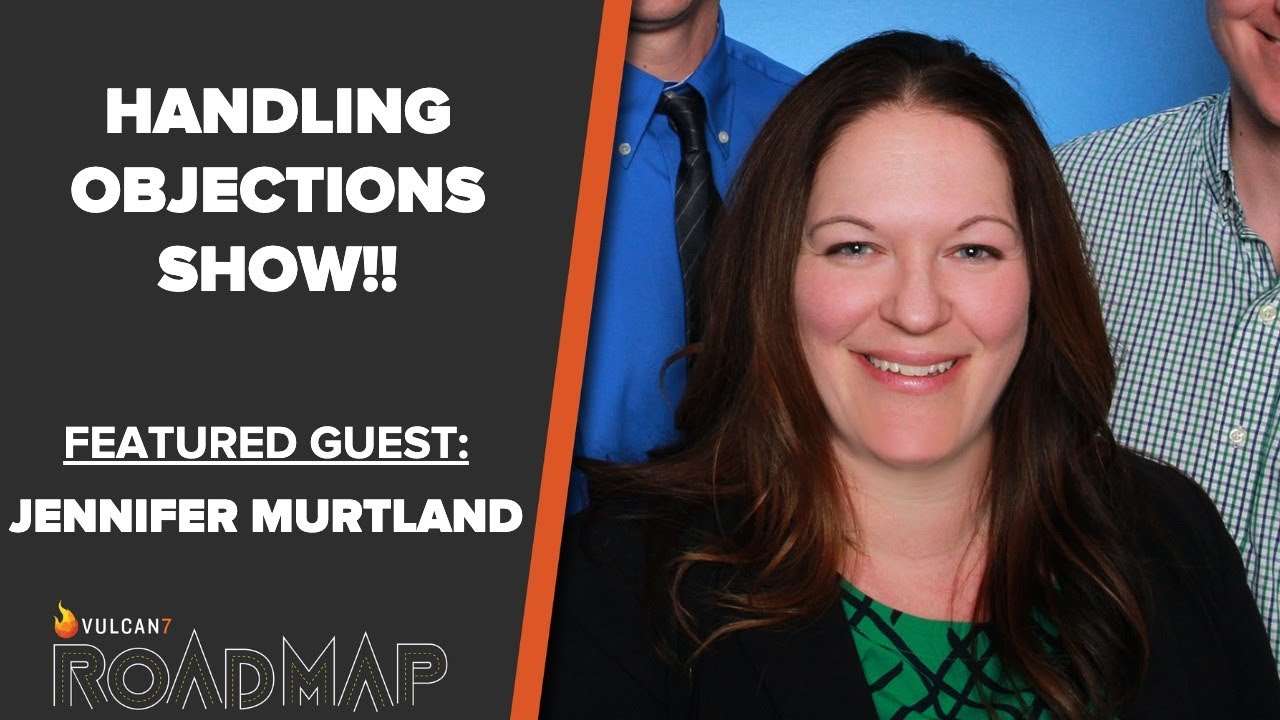
Jennifer Murtland prospects expireds, FSBOs, just listed and just sold leads for four hours each morning.


Ready to take more listings?
Vulcan7 delivers expired, FSBO and FRBO leads with verified contact data, every morning.